Furnace vs. Heat Pump: Which Heating System Is Right for Your Climate?
Choosing between a furnace and a heat pump is one of the most important HVAC decisions a homeowner can make. These two heating systems work very differently, perform better in different climates, and lead to very different installation costs, energy bills, and long-term comfort outcomes. This guide compares furnaces vs. heat pumps directly—by climate zone, operating cost, efficiency, and real-world performance—so you can choose the right system for where you live.
Key Takeaways
- Furnaces perform best in cold and very cold climates
- Heat pumps excel in mild to moderate climates
- Climate matters more than upfront cost
- Energy source (gas vs electric) affects long-term bills
- Hybrid systems combine both for flexibility
How Furnaces and Heat Pumps Work (Core Difference)
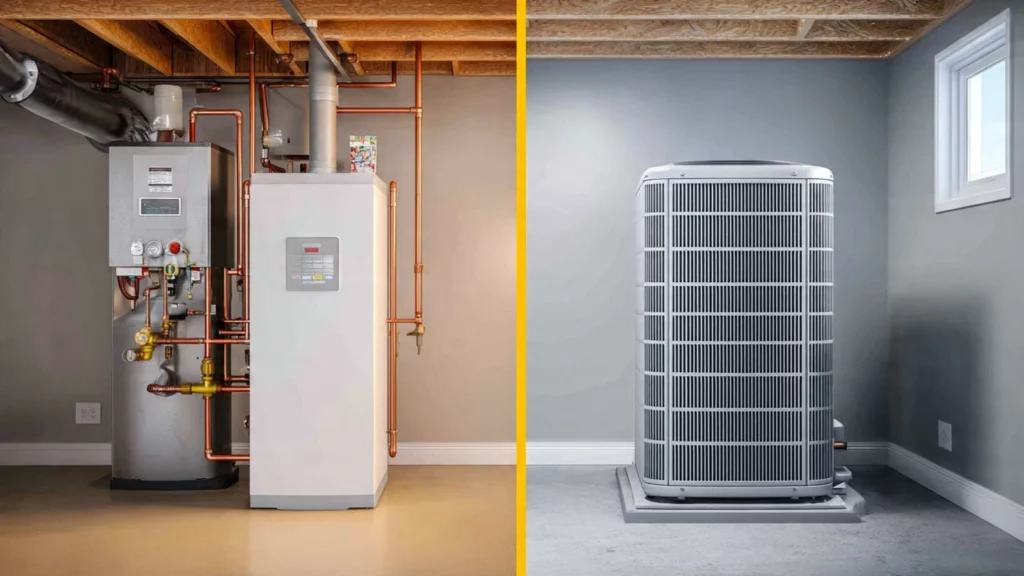
A furnace generates heat by burning fuel (natural gas, propane, or oil) or using electric resistance and then distributes that heat through ductwork.
A heat pump does not create heat—it moves heat from outside air into your home using electricity, even in cold weather.
Cause → Effect → Outcome
- Burning fuel → consistent high heat → strong cold-weather reliability
- Moving heat → high efficiency → lower operating cost in mild climates
Furnace vs. Heat Pump: Cost Comparison
Installed Cost Comparison (Typical USA Ranges)
| System | Typical Installed Cost |
|---|---|
| Gas furnace | $4,000–$7,500 |
| Electric furnace | $3,000–$6,000 |
| Air-source heat pump | $5,000–$10,000 |
| Cold-climate heat pump | $7,000–$13,000 |
| Hybrid system (heat pump + furnace) | $8,000–$15,000 |
Key insight: Heat pumps usually cost more upfront but can cost less to operate depending on climate and electricity rates.
Heating Performance by Climate Zone (Critical Decision Factor)
Best Heating System by Climate
| Climate Type | Furnace | Heat Pump | Best Choice |
|---|---|---|---|
| Very cold (long sub-freezing winters) | Excellent | Fair–Good | Furnace |
| Cold | Excellent | Good (cold-climate models) | Depends |
| Moderate | Good | Excellent | Heat pump |
| Warm / mild | Overkill | Excellent | Heat pump |
Why Climate Matters
- Heat pumps lose efficiency as outdoor temperatures drop
- Furnaces maintain full output regardless of outdoor temperature
- Cold-climate heat pumps mitigate—but don’t eliminate—this issue
Efficiency and Energy Costs
Efficiency Comparison
| System | Efficiency Metric | Typical Range |
|---|---|---|
| Gas furnace | AFUE | 80%–98% |
| Electric furnace | AFUE | ~100% |
| Heat pump | COP / HSPF | 200%–400% equivalent |
What This Means in Real Life
- Heat pumps can deliver 2–4 units of heat per unit of electricity
- Furnaces convert fuel directly into heat, with losses
- Electricity prices vs gas prices heavily influence savings
Monthly Operating Cost Comparison (Typical Scenario)
| System | Cold Climate | Mild Climate |
|---|---|---|
| Gas furnace | Moderate | High |
| Electric furnace | Very high | High |
| Heat pump | High | Low |
| Hybrid system | Optimized | Optimized |
When a Furnace Is the Better Choice
A furnace is usually the right choice if:
- You live in a consistently cold climate
- Natural gas is affordable and available
- You want strong, fast heating output
- Power outages are common (gas furnaces often recover faster)
When a Heat Pump Is the Better Choice
A heat pump is usually the better option if:
- You live in a mild or moderate climate
- You want lower carbon emissions
- You want heating and cooling in one system
- Electricity rates are favorable
Hybrid Systems: Best of Both Worlds
A hybrid system pairs a heat pump with a furnace.
How It Works
- Heat pump runs in mild temperatures
- Furnace takes over in extreme cold
Best For
- Cold-moderate climates
- Homeowners wanting efficiency + reliability
- Long-term energy cost optimization
Common Mistakes to Avoid
- Choosing based on price alone
- Ignoring local winter temperatures
- Assuming all heat pumps work equally in cold climates
- Oversizing equipment
- Not considering future energy price changes
Frequently Asked Questions
Is a heat pump good in cold climates?
Cold-climate heat pumps work better than older models, but furnaces still outperform them in extreme cold.
Which system lasts longer?
Both typically last 15–20 years with proper maintenance.
Is electric heating cheaper than gas?
It depends entirely on local energy prices and climate.
Can a heat pump replace my furnace completely?
Yes, in mild climates. In cold climates, many homes use a hybrid setup.
Which is more environmentally friendly?
Heat pumps generally produce fewer emissions, especially when paired with clean electricity.
Action Steps
- Identify your climate zone and winter temperature range
- Compare local electricity vs gas prices
- Decide whether you want heating only or heating + cooling
- Get quotes for both systems (and hybrid if applicable)
- Choose based on climate fit first, cost second
Conclusion
When comparing furnace vs. heat pump, the right choice depends far more on your climate than on marketing claims or upfront price. Furnaces remain the most reliable option for cold regions, while heat pumps deliver exceptional efficiency in milder climates. For homeowners in between, hybrid systems offer flexibility and long-term savings. Choosing the system that matches your climate ensures comfort, efficiency, and lower lifetime costs.