How to Identify Roof Damage: Inspection Checklist and Repair Timeline
Knowing how to identify roof damage early can prevent thousands of dollars in repairs. Roof damage often starts small—missing shingles, minor leaks, or subtle flashing failures—but escalates quickly if ignored. This guide provides a clear roof inspection checklist and a realistic repair timeline so homeowners can recognize damage, prioritize repairs, and avoid structural issues. Every section directly supports identifying roof damage and determining how fast it must be fixed.
Key Takeaways
- Roof damage is often visible before leaks appear
- Interior signs are as important as exterior damage
- Storms accelerate roof deterioration
- Some damage requires immediate repair, others can wait
- A structured inspection prevents missed problems
Exterior Roof Damage Signs You Can See from the Ground
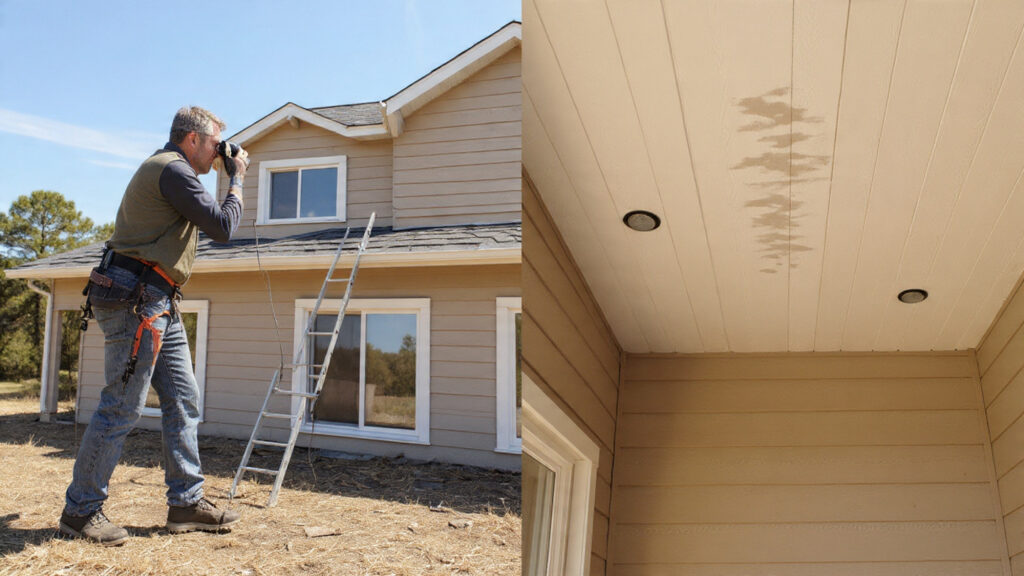
Many types of roof damage are visible without climbing onto the roof.
Ground-Level Inspection Checklist
- Missing or visibly lifted shingles
- Curling, cracked, or buckling shingles
- Uneven rooflines or sagging areas
- Dark streaks or bald shingle patches
- Loose or detached flashing
What These Signs Mean
| Visible Issue | Likely Problem |
|---|---|
| Missing shingles | Wind or storm damage |
| Curling edges | Age or heat damage |
| Sagging roofline | Structural or moisture issue |
| Granule loss | Shingle deterioration |
Cause → effect → outcome:
Weather exposure → shingle damage → water intrusion → roof deck rot.
Roof Damage You’ll Find on the Roof Surface
If safe access is possible, a closer inspection reveals more detailed damage.
Surface-Level Inspection Checklist
- Cracked or broken shingles
- Rusted flashing around chimneys and vents
- Exposed nail heads
- Soft spots when gently pressed
- Debris buildup in roof valleys
Why Surface Damage Matters
Surface damage allows water to bypass protective layers and soak into underlayment and decking.
Interior Signs of Roof Damage Inside the Home
Interior symptoms often appear after exterior damage has existed for some time.
Interior Roof Damage Checklist
- Water stains on ceilings or walls
- Peeling paint near ceiling edges
- Mold or mildew in attic spaces
- Damp insulation
- Dripping water during rain
| Interior Symptom | What It Indicates |
|---|---|
| Ceiling stains | Active or past leak |
| Mold growth | Long-term moisture |
| Wet insulation | Poor roof sealing |
Interior damage usually means repairs are already overdue.
Storm-Related Roof Damage to Watch For
Storms are the most common cause of sudden roof damage in the USA.
After-Storm Inspection Checklist
- Shingles in the yard
- Dents from hail impacts
- Torn flashing
- Debris punctures
- Water intrusion within 24–48 hours
Storm Damage Timeline
Storm damage should be inspected within 48 hours, even if no leaks are visible.
Roof Damage by Roofing Material Type
Different roofing materials show damage in different ways.
Asphalt Shingles
- Granule loss
- Cracking
- Curling edges
Metal Roofing
- Loose fasteners
- Panel separation
- Impact dents
Tile or Slate
- Cracked or displaced tiles
- Broken underlayment beneath tiles
Material-specific damage affects repair urgency and cost.
Roof Inspection Checklist (Printable Summary)
Exterior
- Shingle condition
- Flashing integrity
- Roofline straightness
- Debris accumulation
Interior
- Ceiling discoloration
- Attic moisture
- Mold presence
After Weather Events
- Missing materials
- Water intrusion
- Structural shifting
Routine inspections catch issues early.
Roof Repair Timeline: How Fast You Need to Act
Not all roof damage requires immediate repair, but delays increase costs.
Immediate Repairs (0–7 Days)
- Active leaks
- Missing shingles
- Exposed underlayment
Short-Term Repairs (1–3 Months)
- Minor flashing damage
- Isolated cracked shingles
- Small punctures
Planned Repairs (3–12 Months)
- Aging shingles
- Gradual granule loss
- Cosmetic wear
| Damage Type | Recommended Timeline |
|---|---|
| Active leak | Immediate |
| Storm damage | Within weeks |
| Aging materials | Scheduled |
Delaying urgent repairs risks structural damage.
When Roof Damage Requires Professional Inspection
Professional inspection is recommended when:
- Damage affects large areas
- Roof pitch is steep
- Structural sagging is visible
- Interior leaks persist
- Roof age exceeds 15–20 years
Professionals identify hidden damage not visible to homeowners.
Common Roof Damage Mistakes to Avoid
- Ignoring small leaks
- Walking on damaged shingles
- Delaying post-storm inspections
- Assuming interior stains are old
- Skipping attic checks
These mistakes often turn minor repairs into major replacements.
Frequently Asked Questions
Can roof damage exist without leaks?
Yes. Damage often precedes leaks by months.
How often should a roof be inspected?
At least once per year and after major storms.
Is roof damage always visible?
No. Underlayment and decking damage may be hidden.
Can I repair minor roof damage myself?
Small fixes are possible, but safety and accuracy matter.
Does roof damage affect home value?
Yes. Unrepaired damage reduces value and inspection outcomes.
Action Steps
- Perform ground-level inspection quarterly
- Check attic after heavy rain
- Inspect after major storms
- Address leaks immediately
- Schedule professional inspections as roofs age
Conclusion
Understanding how to identify roof damage gives homeowners control over repair costs and timing. Using a structured roof inspection checklist helps detect problems early, while a realistic repair timeline prevents minor issues from becoming major structural failures. Regular inspections, fast response to leaks, and informed repair decisions protect both your home and your budget.