Landscape Design on a Budget: DIY Plans, Native Plants, and Cost Savings
Creating an attractive yard doesn’t require a large landscaping budget. With smart planning, native plant choices, and a do-it-yourself approach, homeowners can dramatically reduce costs while still achieving a polished, low-maintenance outdoor space. This guide explains how to approach landscape design on a budget, create DIY plans, use native plants effectively, and maximize long-term cost savings.
Key Takeaways
- Planning before planting prevents expensive mistakes
- Native plants lower water and maintenance costs
- DIY landscape design can save thousands
- Phased projects spread costs over time
- Smart material choices deliver long-term savings
Why Budget Landscape Design Starts With Planning
The most expensive landscaping mistakes happen before a single plant is installed. Poor layout decisions lead to overcrowding, constant replanting, and higher maintenance costs. A budget-focused design prioritizes functionality first—drainage, sun exposure, foot traffic—before aesthetics.
A simple hand-drawn plan showing plant placement, paths, and open space helps avoid impulse purchases and wasted materials.
DIY Landscape Design Plans That Actually Work
DIY landscape design doesn’t require professional software.
Effective DIY planning steps
- Measure your yard accurately
- Identify sun, shade, and drainage zones
- Group plants by water and light needs
- Leave space for mature plant sizes
- Start with focal points, then fill in
Free online grid paper or basic garden planning tools work well for most homeowners.
Using Native Plants to Cut Landscaping Costs
Native plants are adapted to local climate and soil, making them ideal for budget landscaping.
Why native plants save money
- Require less water once established
- Fewer fertilizers and soil amendments
- Lower risk of disease and pests
- Reduced replacement costs
Examples include prairie grasses in the Midwest, drought-tolerant shrubs in the Southwest, and native perennials in the Northeast.
Low-Cost Landscaping Ideas That Make a Big Impact
Budget landscaping focuses on high-impact, low-cost changes.
- Mulching instead of decorative stone
- Ground covers instead of sod
- Perennials instead of annual flowers
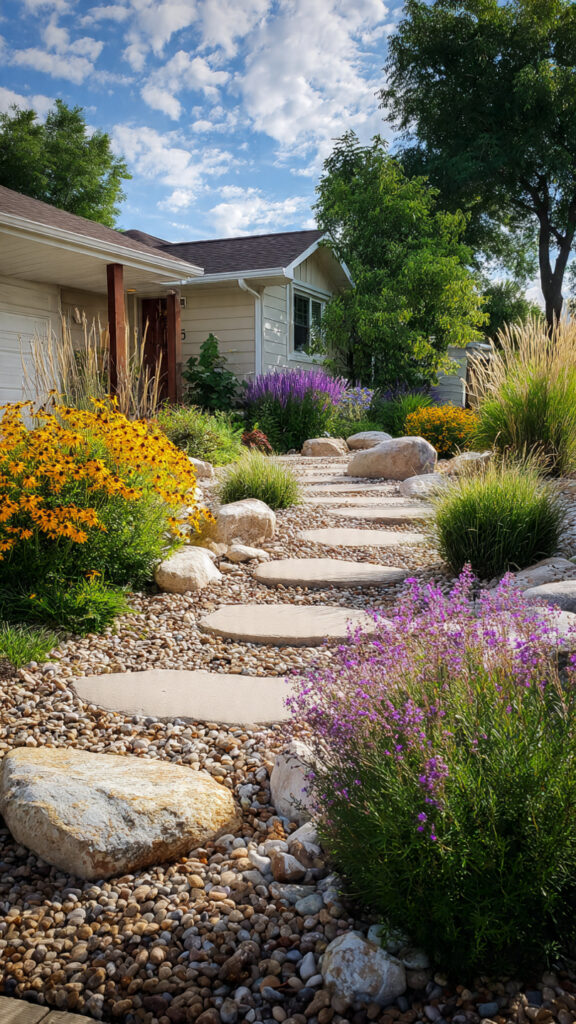
- Gravel paths instead of concrete
- Repurposed edging materials
Mulch alone can instantly improve appearance while improving soil moisture and weed control.
Hardscaping on a Budget
Hardscaping often becomes the most expensive part of landscaping, but smart choices help control costs.
Affordable hardscape options
- Pea gravel or crushed stone patios
- Stepping stones instead of full walkways
- Reused bricks or concrete pavers
- DIY fire pits using retaining wall blocks
Limiting hardscaping to high-use areas prevents overspending.
Phasing Your Landscape Project to Save Money
Completing landscaping in phases spreads costs and allows flexibility.
Recommended phases
- Soil prep and grading
- Trees and large shrubs
- Perennials and ground cover
- Hardscaping features
- Decorative elements
Starting with plants that take longest to mature delivers better long-term results.
Water and Maintenance Cost Savings
Landscaping costs don’t end after installation.
Budget-friendly maintenance strategies
- Drip irrigation instead of sprinklers
- Mulch to retain moisture
- Proper plant spacing to reduce pruning
- Drought-tolerant plants to cut watering
Lower maintenance landscapes save both time and money year after year.
Common Budget Landscaping Mistakes to Avoid
- Buying plants without checking mature size
- Overusing sod in dry climates
- Skipping soil preparation
- Mixing plants with different water needs
- Over-decorating before plants establish
Avoiding these mistakes protects your budget long-term.
Frequently Asked Questions
How much does budget landscaping typically cost?
DIY budget landscaping often ranges from $500–$3,000 depending on yard size.
Are native plants always cheaper?
Yes over time, due to reduced watering, fertilizer, and replacement needs.
Is DIY landscaping worth the effort?
For most homeowners, DIY saves 30–60% compared to professional installation.
Can I mix native and non-native plants?
Yes, as long as water and maintenance needs are similar.
When is the best time to landscape on a budget?
Early spring or fall often provides plant discounts and better establishment.
Action Steps
- Sketch a simple DIY layout
- Identify native plant options for your region
- Prioritize soil preparation
- Phase the project over time
- Track maintenance costs annually
Conclusion
Landscape design on a budget is about smart choices, not sacrificing beauty. With thoughtful DIY planning, strategic use of native plants, and phased installation, homeowners can create attractive, low-maintenance yards while keeping costs under control. The result is a landscape that looks good, lasts longer, and saves money year after year.