The Long-Term Cost of Buying vs Renting Revisited
The debate over buying vs renting is not new, but by 2026 the long-term cost equation has changed significantly. Rising home prices, higher interest rates, increased maintenance costs, and shifting mobility patterns mean the old assumption—buying always wins long term—no longer universally applies.
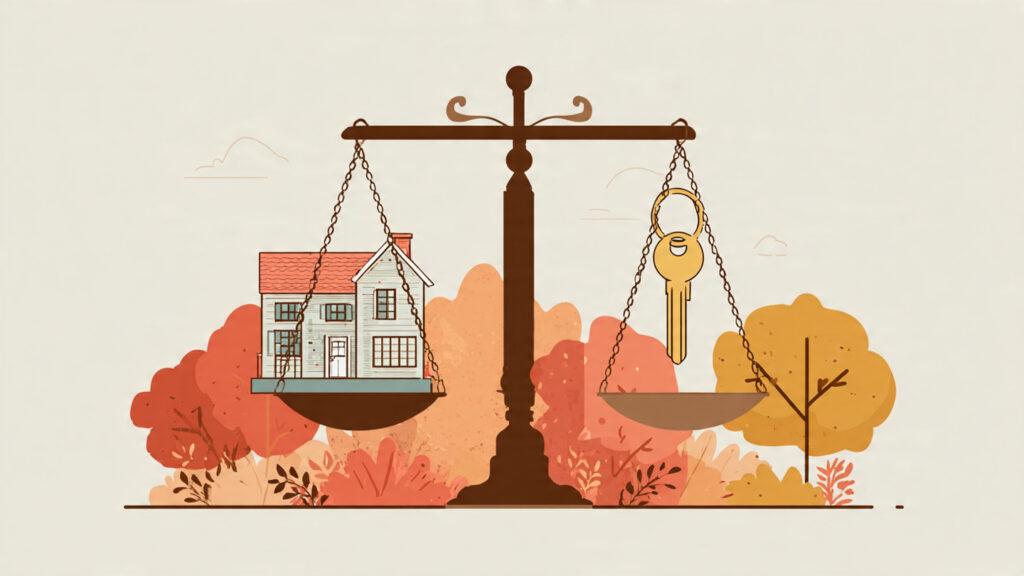
This article revisits the long-term cost of buying vs renting in the USA, using updated assumptions, real-world scenarios, and direct cost comparisons. Every section focuses on long-term financial impact, not lifestyle preference or short-term affordability.
What “Long-Term Cost” Really Means in 2026
Long-term cost is not just monthly payment vs rent.
Costs included in a true long-term comparison
- Purchase price or rent paid
- Financing and interest costs
- Taxes, insurance, and maintenance
- Opportunity cost of tied-up capital
- Flexibility and mobility penalties
Cause → Effect → Outcome
Incomplete cost view → biased conclusions → poor long-term decisions
A correct comparison must include all ownership and renting costs over time.
Upfront Capital: The First Major Divider
Buying requires significant upfront cash. Renting usually does not.
| Expense | Buying | Renting |
|---|---|---|
| Down payment | High | None |
| Closing costs | High | Minimal |
| Security deposit | Low | Moderate |
Outcome:
Capital tied up in buying has an opportunity cost—money that could have been invested elsewhere.
Mortgage Interest Is the Largest Hidden Cost of Buying
In 2026, interest dominates long-term ownership costs.
Typical 30-year mortgage reality
| Item | Approximate Impact |
|---|---|
| Loan principal | Base cost |
| Total interest paid | Often equals or exceeds principal |
Cause → Effect → Outcome
Higher rates → more interest paid → reduced long-term advantage of buying
Many buyers underestimate how much interest inflates total ownership cost.
Maintenance and Repairs Compound Over Time
Maintenance is predictable long term—but often ignored.
Common long-term ownership expenses
- Roof replacement
- HVAC systems
- Plumbing and electrical repairs
- Exterior upkeep
| Home Age | Annual Maintenance % |
|---|---|
| Newer home | ~1% of value |
| Older home | 2–3% of value |
Outcome:
Over 20–30 years, maintenance alone can rival down payment costs.
Renters avoid these expenses entirely.
Property Taxes and Insurance Never Go Away
Ownership costs do not end when the mortgage is paid.
Ongoing ownership expenses
| Cost Type | Long-Term Trend |
|---|---|
| Property taxes | Rising |
| Home insurance | Rising |
| HOA fees | Rising |
Cause → Effect → Outcome
Permanent carrying costs → reduced net ownership advantage
Renters indirectly pay some of these—but with capped exposure.
Rent Increases vs Fixed Payments: The Traditional Argument
Buying’s biggest advantage remains payment stability.
| Factor | Buying | Renting |
|---|---|---|
| Monthly payment | Mostly fixed | Variable |
| Inflation protection | Strong | Weak |
But in 2026:
Rent growth has slowed in many regions, while mortgage costs remain elevated.
Outcome:
The traditional “rent always rises faster” argument is less universal than before.
Opportunity Cost: The Silent Winner for Renters
Money not spent on buying can be invested.
Example: Capital comparison over 20 years
| Scenario | Result |
|---|---|
| Down payment invested | Significant growth potential |
| Down payment tied to home | Illiquid equity |
Cause → Effect → Outcome
Liquid investments → compounding returns → potential net advantage for renters
This factor alone can flip long-term outcomes.
Mobility and Flexibility Have Monetary Value
Long-term plans are less predictable in 2026.
Costs of reduced flexibility
- Selling costs
- Market timing risk
- Job relocation penalties
| Situation | Buying Risk | Renting Risk |
|---|---|---|
| Job change | High | Low |
| Relocation | High | Low |
Outcome:
Renting reduces long-term financial friction in uncertain careers.
Equity Isn’t the Same as Profit
Home equity is often misunderstood.
Equity realities
- Built slowly in early years
- Reduced by interest and maintenance
- Only realized when selling
| Equity Type | Liquidity |
|---|---|
| Home equity | Low |
| Investment assets | High |
Cause → Effect → Outcome
Illiquid equity → delayed benefit → lower effective return
Equity is valuable—but not free or immediate.
Long-Term Cost Comparison: 20-Year Snapshot
| Category | Buying | Renting |
|---|---|---|
| Total cash outflow | High | Moderate |
| Asset ownership | Yes | No |
| Flexibility | Low | High |
| Risk exposure | High | Lower |
| Potential upside | Variable | Market-driven |
Key insight:
Buying only clearly wins long term when price, rate, duration, and stability align.
When Buying Still Wins Long Term
Buying can still outperform renting when:
- Purchase price is reasonable
- Interest rates are low or refinanced
- Ownership duration exceeds 10–15 years
- Maintenance is controlled
- Location appreciates steadily
Outcome:
Buying rewards stability and patience, not speculation.
When Renting Wins Long Term
Renting can win when:
- Prices are inflated
- Rates are high
- Mobility is required
- Capital can be invested effectively
- Maintenance risk is undesirable
Outcome:
Renting becomes a strategic financial choice—not a temporary one.
Key Takeaways
- The long-term cost of buying vs renting must be fully recalculated in 2026
- Interest, maintenance, and opportunity cost reshape outcomes
- Buying is no longer an automatic long-term win
- Renting offers flexibility and capital efficiency
- The “better” option depends on duration, market, and personal stability
Conclusion
The long-term cost of buying vs renting in the USA looks very different in 2026 than it did a decade ago. Higher rates, higher maintenance, and higher opportunity costs mean buying only wins under specific conditions. Renting, once dismissed as wasted money, now offers financial flexibility and investment potential that can rival or exceed ownership.
The correct decision isn’t ideological—it’s analytical. Long-term cost depends on how long you stay, what you give up, and how effectively you deploy your capital.