Complete Guide to Home Insulation: Types, Costs, and ROI by Climate Zone
Home insulation is one of the most cost-effective ways to lower energy bills and improve comfort. The right insulation reduces heat loss in winter, limits heat gain in summer, and helps HVAC systems work more efficiently. This complete guide explains home insulation types, typical costs, and return on investment (ROI)—with clear recommendations based on U.S. climate zones so you can choose what pays off most where you live.
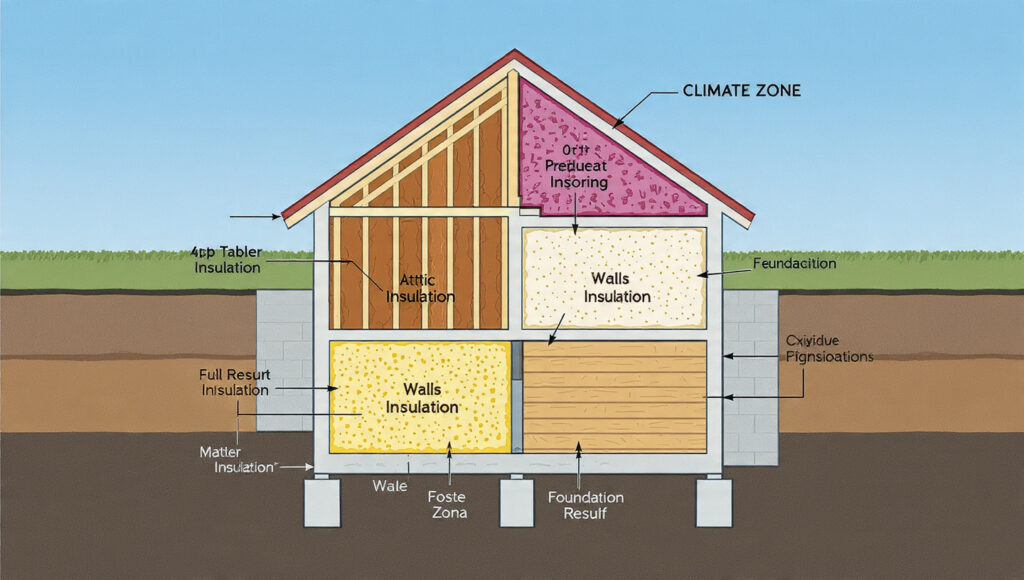
Key Takeaways
- Insulation choice should match your climate zone, not just price.
- R-value measures insulation performance; higher isn’t always better everywhere.
- Attic and air-sealing upgrades usually deliver the fastest ROI.
- Most homes can cut heating and cooling costs by 10–30% with proper insulation.
- Federal, state, and utility incentives can significantly reduce upfront costs.
What Home Insulation Does and Why It Matters
Insulation slows heat transfer between your home and the outdoors. In cold climates, it keeps heat inside; in hot climates, it blocks heat from entering. Poor insulation forces heating and cooling systems to run longer, increasing electricity and gas costs. Proper insulation stabilizes indoor temperatures, improves comfort, and reduces wear on HVAC equipment—directly lowering monthly utility bills.
Types of Home Insulation Explained
Fiberglass Insulation
The most common option in U.S. homes.
- Available as batts or blown-in
- Affordable and widely available
- Best for attics, walls, and floors
- Typical R-value: R-2.5 to R-3.8 per inch
Cellulose Insulation
Made from recycled paper treated for fire resistance.
- Excellent air-sealing when blown in
- Eco-friendly option
- Performs well in walls and attics
- Typical R-value: R-3.2 to R-3.8 per inch
Spray Foam Insulation
Expands to seal gaps and cracks.
- Highest air-sealing performance
- Higher upfront cost
- Ideal for basements, crawl spaces, and rim joists
- Typical R-value: R-6 to R-7 per inch (closed-cell)
Rigid Foam Board
Solid panels used for targeted insulation.
- High R-value in thin layers
- Common for exterior walls and foundations
- Moisture-resistant options available
Mineral Wool (Rock Wool)
Fire-resistant and moisture-resistant.
- Good soundproofing
- Higher cost than fiberglass
- Strong performance in walls and ceilings
Home Insulation Costs in the USA
Costs vary by material, location, and installation method. Below are typical installed price ranges.
| Insulation Type | Typical Cost per sq. ft. |
|---|---|
| Fiberglass (batts) | $0.80 – $1.50 |
| Blown-in fiberglass | $1.00 – $2.00 |
| Cellulose (blown-in) | $1.20 – $2.50 |
| Spray foam (open-cell) | $1.50 – $3.50 |
| Spray foam (closed-cell) | $3.00 – $6.50 |
| Rigid foam board | $2.00 – $4.00 |
Average whole-home insulation upgrades: $1,500–$6,000
Attic insulation upgrades: $1,000–$3,000
Insulation R-Values and Energy Performance
R-value measures resistance to heat flow. Higher R-values mean better insulation, but the right R-value depends on climate.
- Attics typically require the highest R-values
- Walls need moderate R-values with good air sealing
- Crawl spaces and basements benefit from moisture-resistant insulation
Over-insulating without air sealing often delivers poor returns, so sealing gaps is as important as insulation thickness.
Best Insulation by U.S. Climate Zone
Cold Climates (Zones 5–7)
Examples: Upper Midwest, Northeast
- Best types: Spray foam + fiberglass or cellulose
- Focus areas: Attic, exterior walls, basements
- Recommended attic R-value: R-49 to R-60
Mixed Climates (Zones 3–4)
Examples: Mid-Atlantic, parts of the Midwest
- Best types: Blown-in cellulose or fiberglass
- Focus areas: Attic and wall cavities
- Recommended attic R-value: R-38 to R-49
Hot Climates (Zones 1–2)
Examples: Southern states
- Best types: Spray foam, radiant barriers, rigid foam
- Focus areas: Attic roof deck and walls
- Recommended attic R-value: R-30 to R-38
Return on Investment: How Insulation Pays for Itself
Insulation upgrades often pay back faster than many home improvements.
Typical ROI by Upgrade
- Attic insulation: 2–5 years
- Wall insulation: 4–7 years
- Spray foam air sealing: 3–6 years
Estimated Annual Savings
- Cold climates: $300–$600
- Mixed climates: $200–$400
- Hot climates: $150–$350
Homes with poor insulation typically see the highest returns.
DIY vs Professional Insulation Installation
DIY Makes Sense If
- Installing fiberglass batts
- Adding attic insulation
- Working in accessible spaces
Hire a Professional If
- Using spray foam
- Insulating walls or crawl spaces
- Air sealing is required
- You want to qualify for rebates or tax credits
Professional installation ensures proper coverage, correct R-values, and code compliance.
Frequently Asked Questions
Which insulation gives the best ROI?
Attic insulation consistently delivers the fastest payback across all climates.
Is spray foam worth the cost?
Yes in extreme climates or leaky homes, but fiberglass or cellulose often offers better value for standard upgrades.
Can insulation really lower my electricity bill?
Yes. Proper insulation typically reduces heating and cooling energy use by 10–30%.
Do insulation rebates exist?
Many utilities and federal programs offer rebates, tax credits, or financing for insulation upgrades.
How long does insulation last?
Most insulation lasts 20–50 years if kept dry and undisturbed.
Action Steps
- Identify your U.S. climate zone
- Inspect attic and wall insulation levels
- Seal air leaks before adding insulation
- Compare insulation types based on ROI
- Check for local rebates and tax credits
- Upgrade the areas with the fastest payback first
Conclusion
Home insulation is one of the smartest investments you can make to lower energy costs and improve comfort. By choosing the right insulation type, installing appropriate R-values, and matching upgrades to your climate zone, most U.S. homeowners can achieve meaningful savings with strong long-term ROI. Start with high-impact areas like attics and air sealing, and build from there.