Skills That Matter More Than Degrees in the Auto Industry Today
College degrees still exist in the U.S. auto industry—but they no longer determine career value the way they once did. Today, employers consistently prioritize specific, demonstrable skills over formal degrees, especially as vehicles become more software-driven, electrified, and automated.
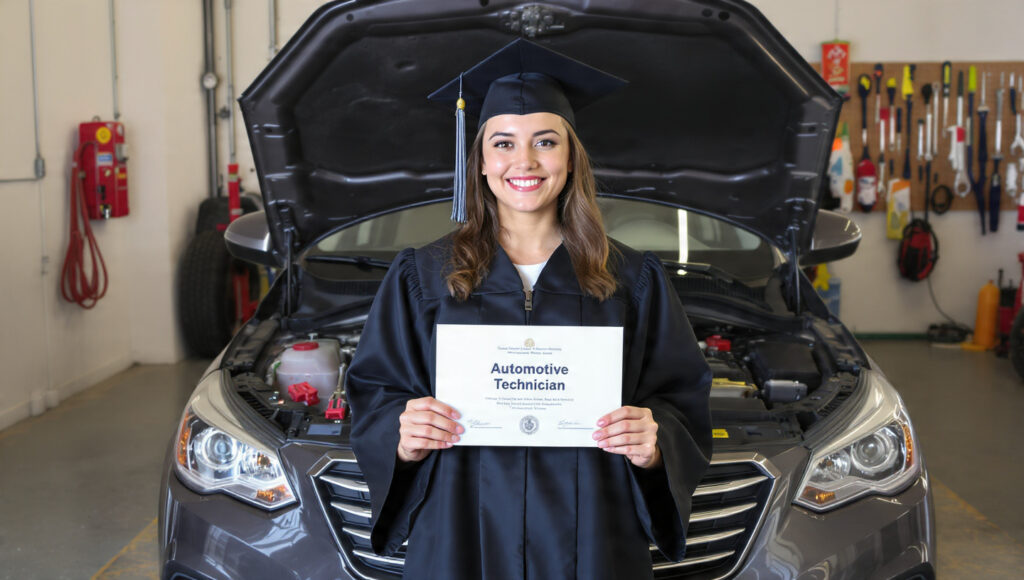
This article explains which skills matter more than degrees in the auto industry today, why those skills replaced degree-based hiring, and how this shift affects technicians, engineers, manufacturing workers, and sales professionals. Every section directly supports the title—no abstractions, no drift.
Why Skills Are Replacing Degrees in the Auto Industry
The auto industry evolves faster than academic programs.
Cause → Effect → Outcome
- Rapid technology change
- Degrees lag behind real tools
- Skills become the hiring currency
Vehicle platforms change every 7–10 years. Software, diagnostics tools, and manufacturing systems change every 12–24 months. Employers hire for what you can do now, not what you studied years ago.
The Most Valuable Skills in the Auto Industry Today (USA)
The following specific skills consistently outperform degrees in hiring and promotion decisions.
Core Skill Categories That Matter Most
- Software and diagnostics literacy
- Electrical and EV systems knowledge
- Automation and robotics operation
- Data interpretation and troubleshooting
- Cross-disciplinary problem solving
Degrees help initial entry. Skills determine career survival.
Software & Diagnostics Skills (More Valuable Than Engineering Degrees Alone)
Modern vehicles are software platforms on wheels.
Skills employers value
- Reading diagnostic data streams
- Using scan tools and calibration software
- Updating vehicle firmware
- Interpreting fault codes beyond replacement logic
| Technician Profile | Career Value |
|---|---|
| Degree only | Declining |
| Degree + diagnostics skill | Stable |
| Diagnostics skill without degree | High demand |
Outcome:
Technicians with software skills advance faster than degree-only engineers who lack hands-on diagnostic ability.
EV & High-Voltage Electrical Skills (Degree Optional, Skill Mandatory)
Electric vehicles rewrote job requirements.
High-value EV skills
- Battery health analysis
- High-voltage safety procedures
- Thermal management systems
- Power electronics troubleshooting
| Skill Type | Transferability |
|---|---|
| ICE mechanical repair | Low |
| Electrical diagnostics | High |
| Battery systems | Very high |
Cause → Effect → Outcome
- EV growth → fewer mechanical parts
- More electrical systems → fewer traditional roles
- Specialized electrical skills → job security without degrees
Automation & Robotics Skills in Manufacturing
Factories no longer hire for muscle—they hire for control.
In-demand factory skills
- Robot programming adjustment
- Sensor calibration
- PLC monitoring
- Automated quality inspection
| Worker Type | Job Stability |
|---|---|
| Manual assembly | Low |
| Robot operator | Medium |
| Automation technician | High |
Degrees in manufacturing matter less than the ability to keep machines running.
Systems Thinking Beats Narrow Degrees
Modern vehicles are integrated systems.
Skills that outperform specialization
- Root-cause analysis
- Cross-system troubleshooting
- Software-hardware interaction understanding
| Approach | Career Ceiling |
|---|---|
| Single-system focus | Limited |
| Systems thinker | Expanding |
Outcome:
Workers who understand how systems interact outperform degree-holders stuck in silos.
Sales & Customer Education Skills Trump Business Degrees
Selling cars now means explaining technology, not just negotiating price.
High-value sales skills
- Explaining driver-assistance limitations
- Teaching EV charging behavior
- Managing software subscriptions
- Translating technical features into benefits
| Sales Background | Effectiveness |
|---|---|
| Business degree only | Declining |
| Tech-literate communicator | High |
Cause → Effect → Outcome
- Complex vehicles → confused buyers
- Clear explanations → higher trust
- Skillful educators → higher sales performance
Continuous Learning Ability Is the #1 Meta-Skill
The most valuable skill is learning speed.
What employers watch for
- Ability to self-train on new tools
- Comfort with updates and change
- Adaptation under incomplete information
| Worker Trait | Long-Term Value |
|---|---|
| Static expertise | Low |
| Adaptive learner | Very high |
Degrees freeze knowledge in time. Skills evolve.
Certifications, Micro-Skills, and Proof Beat Diplomas
Employers increasingly ask: “Can you prove it?”
Proof-based hiring signals
- Tool proficiency demonstrations
- Safety certifications
- Platform-specific training
- Portfolio of solved problems
Outcome:
Demonstrated skill > framed diploma.
What This Means for Auto Industry Careers in the USA
Practical implications
- Entry without a degree is realistic
- Skill stacking beats formal credentials
- Career mobility increases with adaptability
- Traditional degree pathways lose exclusivity
The industry rewards capability, not credentials.
Key Takeaways
- Skills now matter more than degrees in the U.S. auto industry
- Software, EV, automation, and diagnostics skills lead hiring decisions
- Systems thinking outperforms narrow specialization
- Continuous learning is the most valuable long-term skill
- Proof of skill beats academic credentials
Conclusion
Skills matter more than degrees in the auto industry today because technology evolves faster than education systems. Employers need workers who can diagnose, adapt, and solve problems in real time—not just those with formal credentials.
In the modern U.S. auto industry, what you can do outweighs what you studied. Workers who invest in practical, transferable skills build longer, more resilient careers than those who rely solely on degrees.