Water Heater Buying Guide: Tank vs. Tankless, Costs, and Installation
Choosing the right water heater is one of the most important decisions for your home’s comfort and energy costs. Whether you’re building a new home, replacing an old unit, or upgrading to save on energy bills, this guide explains the differences between tank and tankless systems, walks through costs, highlights installation requirements, and helps you decide what’s best for your household in the USA.
Key Takeaways
- Tank water heaters are typically less expensive upfront but cost more to operate.
- Tankless water heaters are more efficient and can reduce energy bills over time.
- Fuel type (gas vs. electric) affects costs, performance, and installation.
- Proper sizing ensures you have reliable hot water when you need it.
- Installation complexity and requirements vary widely between types.
Why Choosing the Right Water Heater Matters
Your water heater accounts for roughly 15–25% of home energy use, making it one of the biggest contributors to monthly utility bills. The right system improves comfort, reduces energy waste, and lasts for years when properly maintained. A mismatch in size, fuel type, or installation quality can lead to frequent repairs and expensive operating costs.
Tank vs Tankless Water Heaters: Key Differences
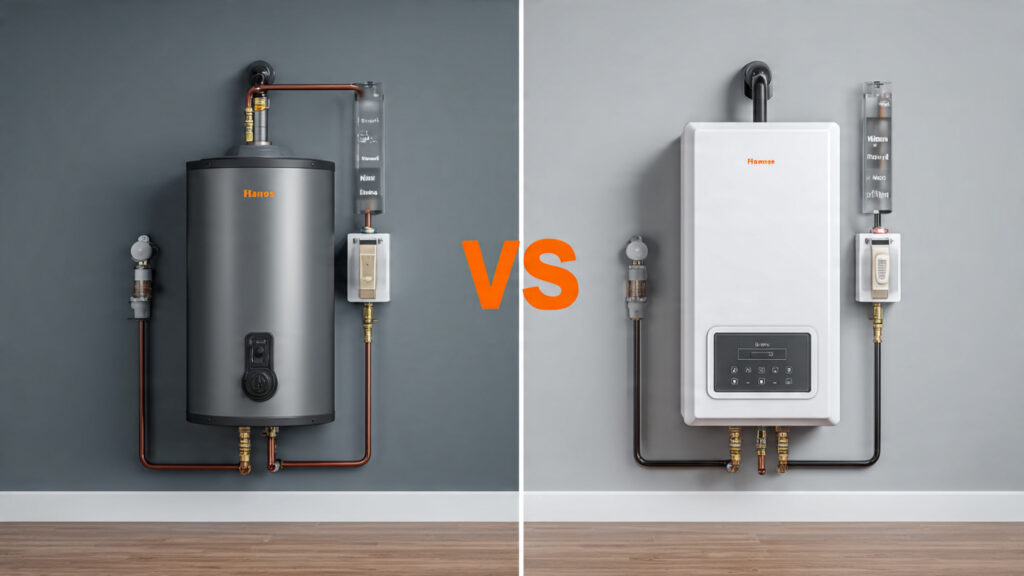
Tank Water Heaters
These traditional systems store and heat a fixed amount of water in a tank (usually 30–80 gallons). Heated water sits ready until used.
Pros
- Lower upfront cost
- Simpler installation
- Reliable hot water for simultaneous uses
Cons
- Higher energy bills due to standby heat loss
- Large footprint in utility spaces
- Limited hot water during peak demand
Tankless Water Heaters
Also called on-demand heaters, these systems heat water only when you open a faucet, eliminating standby losses.
Pros
- Higher energy efficiency (no standby loss)
- Longer lifespan (often 20+ years)
- Smaller, space-saving design
Cons
- Higher upfront cost
- Higher installation cost
- May require upgraded gas lines or electrical service
Water Heater Costs in the USA
Costs vary widely depending on fuel type, capacity, and brand.
| Type | Typical Unit Cost | Installation Cost | Total Installed Cost |
|---|---|---|---|
| Electric Tank | $400–$900 | $400–$900 | $800–$1,800 |
| Gas Tank | $600–$1,500 | $700–$1,200 | $1,300–$2,700 |
| Electric Tankless | $800–$1,800 | $900–$1,800 | $1,700–$3,600 |
| Gas Tankless | $900–$2,000 | $1,000–$2,500 | $1,900–$4,500 |
Typical break points
- Tank systems: Travel trailer or small home sizes usually fall under $2,000 installed.
- Tankless systems: Larger homes with high hot water demand often exceed $3,000.
Installation Requirements and Costs
Electric vs Gas Installations
Electric Water Heaters
- Require adequate electrical panel capacity
- Wiring upgrades may be necessary
- Easier to install in many homes
Gas Water Heaters
- Must connect to gas supply
- Require proper venting (power vent or direct vent)
- Often higher installation costs
Permits and Labor
Most states require a permit for water heater installation. Licensed professionals ensure compliance, which protects resale value and safety. Labor rates vary across the USA, often between $50–$120 per hour depending on region.
How to Choose the Right Water Heater for Your Home
Consider Household Size
- 1–2 people: 30–40 gallon tank or small tankless unit
- 3–4 people: 40–50 gallon tank or mid-size tankless
- 5+ people: 50+ gallon tank or multiple tankless zones
Consider Fuel Type Availability
- Gas usually cheaper to operate than electric in most regions
- Electric may work better where gas is unavailable or short runs are needed
Consider Usage Patterns
- Frequent simultaneous showers or laundry mean higher peak demand
- Tankless excels when hot water is needed at specific moments without waste
Maintenance and Longevity
Routine maintenance extends lifespan and efficiency.
- Flush tank water heaters annually to remove sediment
- Inspect anode rods every 2–3 years
- For tankless systems, descaling (especially in hard water areas) improves performance
Typical lifespans:
- Tank systems: 8–12 years
- Tankless systems: 15–20+ years
Frequently Asked Questions
Which water heater type saves the most energy?
Tankless systems typically save more because they heat only as needed.
Can I install a water heater myself?
DIY is not recommended for gas or complex electrical systems; professional installation ensures safety and compliance.
Does tankless guarantee endless hot water?
Yes in theory, but flow limits and household demand can require multiple units.
Are there rebates for efficient heaters?
Yes — federal, state, and utility incentives often reduce cost for ENERGY STAR models.
Which lasts longer, tank or tankless?
Tankless generally outlasts tank systems when properly maintained.
Action Steps
- Assess your hot water needs and household size
- Decide fuel type based on utility costs and availability
- Get multiple installation quotes
- Compare long-term operating costs (not just upfront price)
- Look for rebates or incentives
Conclusion
Choosing the right water heater affects comfort, energy use, and long-term costs. Tank models remain reliable and affordable upfront, while tankless water heaters deliver efficiency and space savings over time. Evaluating household needs, fuel type, and installation requirements helps you make a smart, energy-efficient choice for your home.